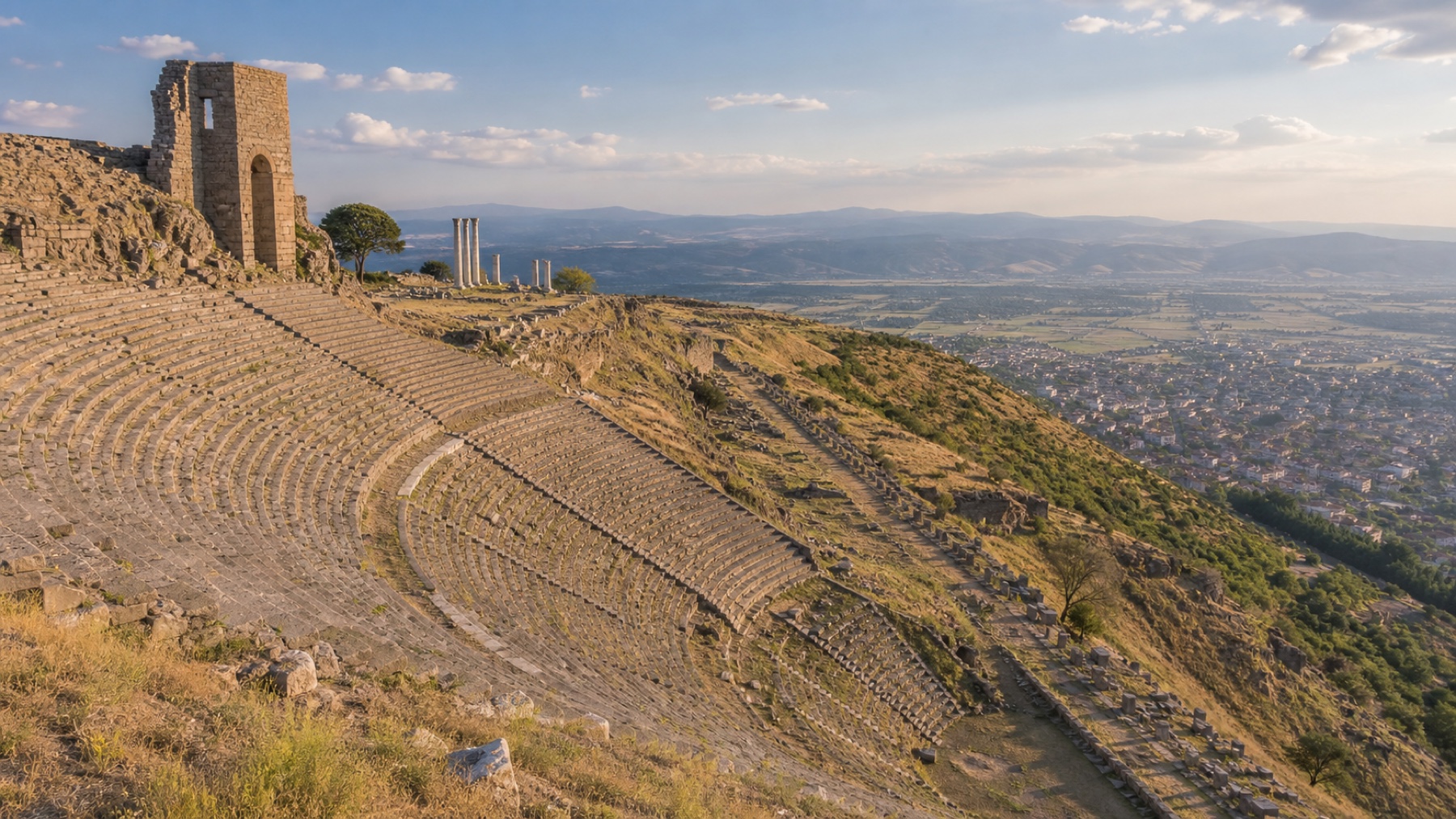
Pergamon makes its first impression from a distance. The Acropolis rises above the Bakırçay Plain on a hill so commanding that the geography itself feels like part of the architecture. That is exactly the point: this UNESCO property is a cultural landscape, not merely a cluster of monuments.
A capital built into a hillside
Pergamon became the capital of the Hellenistic Attalid dynasty in the third century BCE and grew into an influential political, artistic and intellectual centre. Rather than flattening the steep terrain, its builders used terraces to arrange temples, porticoes, a gymnasium, library and palace areas across the slope. The theatre, famous for the dramatic angle of its seating, opens towards the plain and makes the relationship between city and landscape impossible to miss.
The city was known for learning as well as power. Its library ranked among the great collections of the Hellenistic world, while the Pergamene school of sculpture developed a vigorous, expressive style. Some celebrated works from the site are now in collections abroad, so the Acropolis asks visitors to read foundations, fragments and terrain with imagination.
More than the Acropolis
After Pergamon passed to Rome in 133 BCE, it remained a major centre and became associated with the Roman province of Asia. The Asklepieion below the Acropolis developed as a renowned sanctuary of healing. Sacred water, ritual, rest, movement and forms of treatment were brought together there. Galen, one of antiquity’s most influential physicians, was born in Pergamon and received his early medical education in the city.
The UNESCO landscape also includes tumuli, the Kybele Sanctuary and layers from the Roman, Byzantine and Ottoman periods. In modern Bergama, the Red Basilica, historic mosques, baths, bridges, markets and traditional streets continue the story. A visit that goes straight back to İzmir after the Acropolis misses precisely the multi-layered character for which Pergamon is recognised.
How to plan the day
Pergamon is roughly a two-hour road journey from central İzmir, depending on traffic and your starting point. Allow a full day if you want to see the Acropolis, Asklepieion, Bergama Museum and part of the old town without racing between them. The Acropolis cable car can reduce the uphill driving and walking, but current operation should be checked locally.
Summer heat can be intense and exposed sections have little shade. Start with the Acropolis in the morning, pause for lunch in Bergama, then continue with the Asklepieion and town. Wear shoes suitable for worn stone and gradients. Seasonal opening hours and ticket rules should always be confirmed before departure.
A local way to experience Bergama
Do not treat the modern town as a service stop between archaeological sites. Walk through the market streets, notice the reused stone and changing building traditions, and look back towards the Acropolis from below. The enduring power of Pergamon comes from this vertical conversation: the royal city above, the healing sanctuary outside it and everyday Bergama continuing at the foot of the hill.
Editorial sources: Primary source · Supporting source. Visitor information can change; verify opening arrangements before travelling.
Share a useful local note