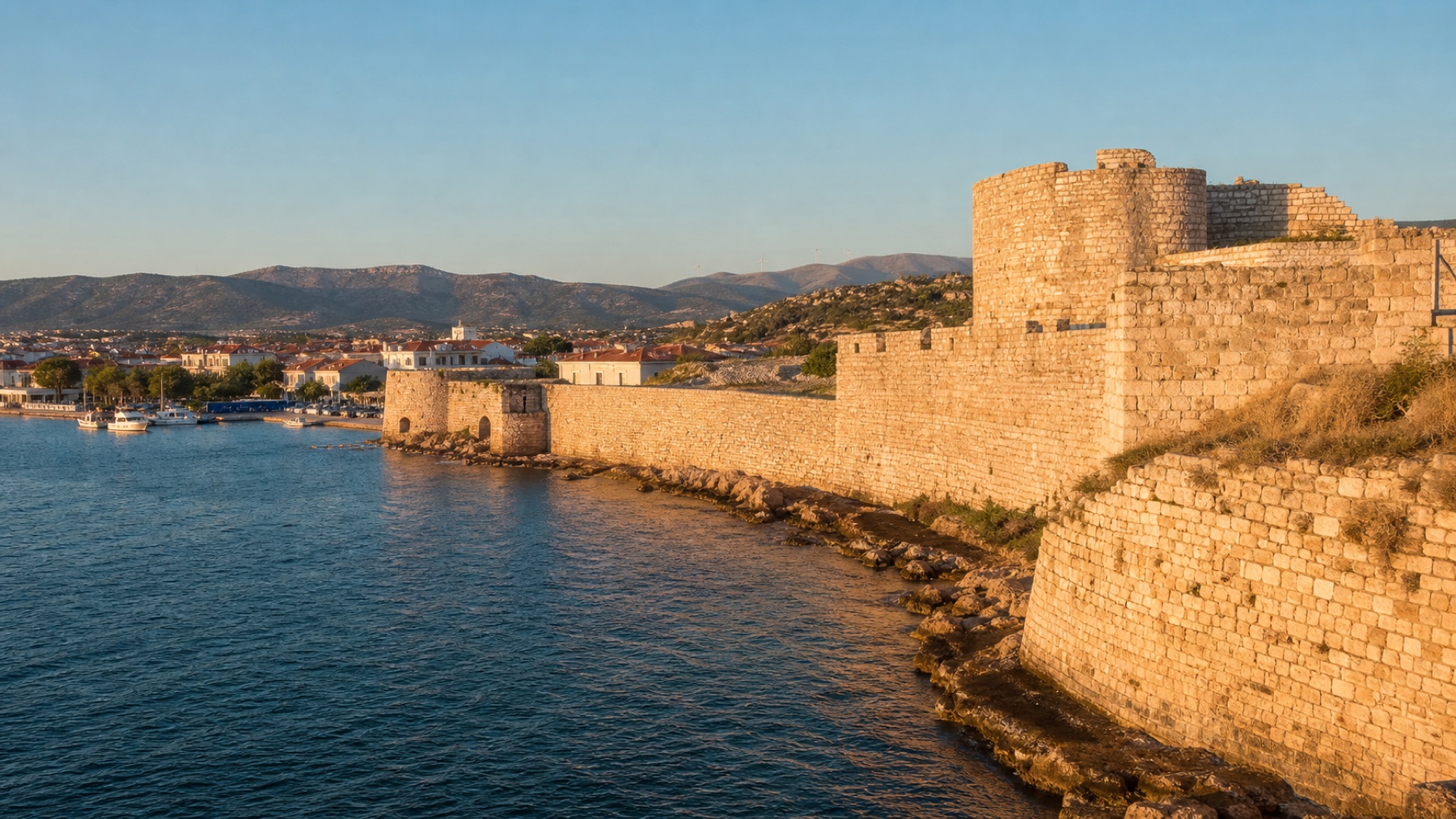
Old Foça is often approached as a pretty waterfront town, but its harbour shape and fortifications tell a harder, more strategic story. Medieval maritime powers valued this coast because protected anchorages and island channels allowed ships, goods and information to move through the Aegean. Foça Castle formed part of that defended trading landscape.
The Genoese connection
Foça, known in antiquity as Phokaia, had a maritime tradition long before the Middle Ages. The Genoese became influential here during the thirteenth and fourteenth centuries, when trading networks connected the Eastern Mediterranean, Aegean, Bosphorus and Black Sea. Fortified ports were not isolated military outposts: they helped secure commercial movement and negotiate power along the coast.
Foça Castle is included in a serial property on Türkiye’s UNESCO Tentative List concerning Genoese trading posts and fortifications. Tentative status does not make the castle a World Heritage Site, but it identifies its potential importance within a much larger network. A revised tentative proposal published in 2026 also places Foça among the fortified components of the Genoese maritime system.
What survives today
The fortifications around Old Foça have changed repeatedly. Byzantine, Genoese and Ottoman phases, repairs and later urban development all contributed to what visitors see. The Five Gates section near the waterfront is the most recognisable surviving element. Rather than expecting a complete furnished castle, approach the walls as evidence of how the harbour was controlled and protected.
Walk the shoreline and look back towards the headlands. The relationship between walls, harbour entrances, islands and visibility is more informative than any single stone detail. The setting explains why Foça mattered.
Combining the castle with Old Foça
Allow time for the waterfront, Beşkapılar, the old streets and viewpoints around the peninsula. Boat trips can offer another perspective on the coastline, although routes depend on weather and season. The wider area is environmentally sensitive and associated with Mediterranean monk seals, so responsible operators and respectful distances matter.
Old Foça is busiest on summer weekends. Spring, early summer weekdays and autumn are often better for walking. Some fortification areas may have access restrictions or restoration work; follow local signs and do not climb unstable masonry.
A more useful way to read the site
There is no need to force every surviving wall into one neat date. Foça’s value lies in adaptation: an ancient maritime settlement became a medieval trading base, then continued through Ottoman and modern periods. Sit by the harbour after your walk and watch fishing boats, ferries and excursion vessels use the same protected geography. The continuity of the port is the clearest interpretation panel of all.
Editorial sources: Primary source · Supporting source. Visitor information can change; verify opening arrangements before travelling.
Share a useful local note