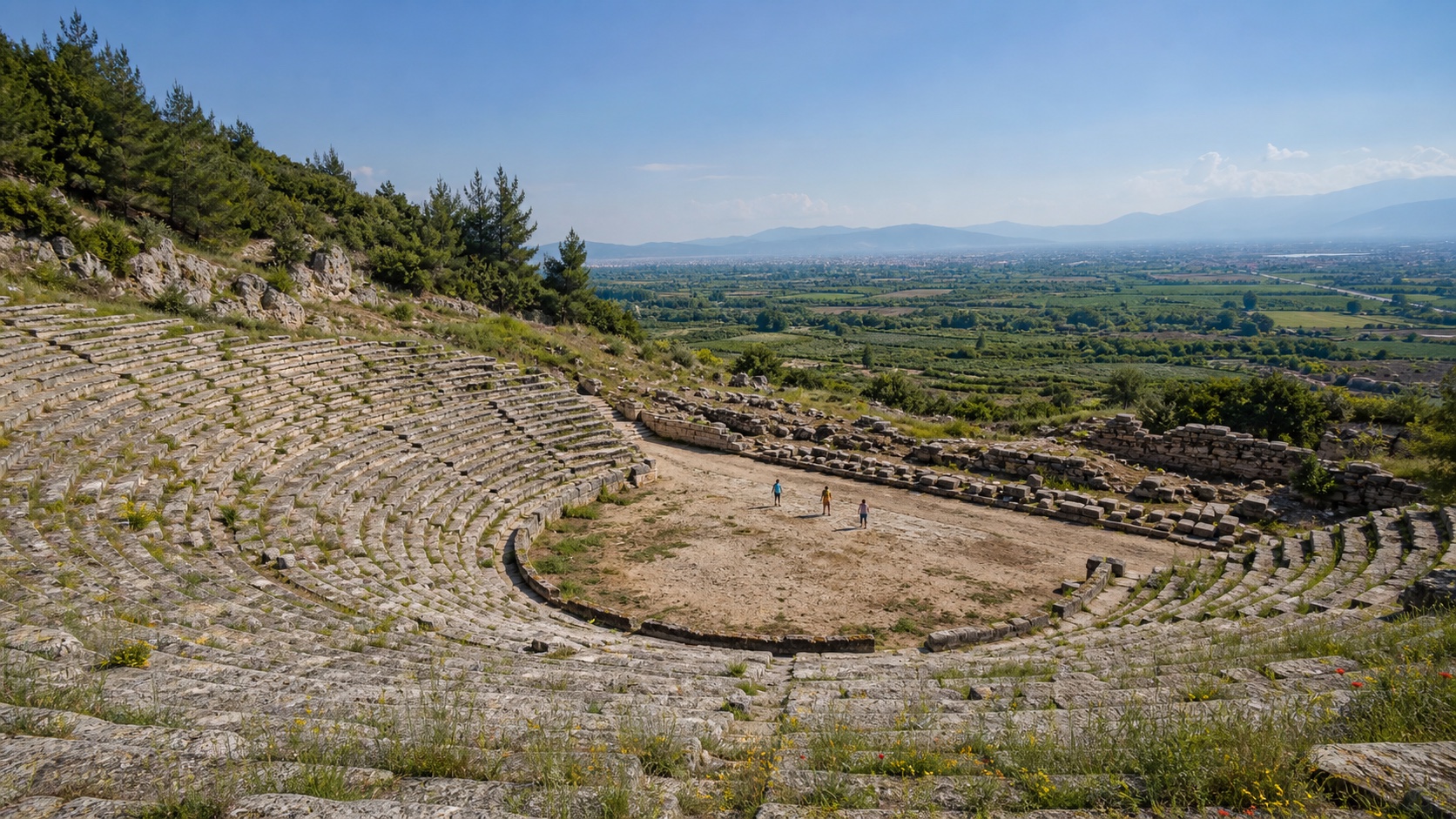
Metropolis is close enough to İzmir for an easy day trip, yet its hillside setting above the Torbalı Plain feels distinctly removed from the city. The ruins are compact, varied and unusually good at showing how public life worked: citizens watched performances, debated civic matters, bathed, worshipped and decorated reception spaces within a carefully terraced town.
The name is commonly understood as “City of the Mother Goddess”, reflecting the religious landscape of the region. Evidence on the acropolis reaches back to the third millennium BCE, while many of the most legible public buildings belong to the Hellenistic and Roman periods.
Why Metropolis is rewarding
Unlike sites dominated by one famous monument, Metropolis offers a balanced ensemble. Its theatre, bouleuterion, stoa, baths and domestic remains are close enough to compare. That makes it easier to understand the difference between entertainment, government, commerce and private life.
Highlights to explore
The theatre
The small Hellenistic theatre is known for marble seats of honour decorated with griffins. Its scale feels intimate, and the view across the plain reinforces the relationship between the city and its agricultural territory.
The bouleuterion
This council building held roughly four hundred people. Curved seating and radial stairs resemble a small theatre, but its function was political: it provided an organised setting in which decisions about the city could be discussed.
The mosaic hall
Beside the theatre, a Roman reception space preserves mosaics associated with Dionysus, Ariadne, theatrical masks, animals and birds. The imagery connects architecture with performance culture without requiring us to label the room more precisely than the evidence permits.
Baths and later layers
Bath complexes and later Christian remains show that Metropolis continued to change. Look for reused spaces and altered routes rather than imagining a city abandoned at the end of a single golden age.
Visitor planning
Allow around ninety minutes, or two hours if you enjoy reading plans and interpretation panels. The site climbs across terraces and shade is limited. Take water, use supportive shoes and check current opening and ticket arrangements through official channels before setting out.
Public transport to the wider Torbalı area does not necessarily solve the final approach to the ruins. A car or arranged transfer is usually more practical, particularly if combining Metropolis with nearby villages or another southern İzmir stop.
İzmirBlog can build Metropolis into a private archaeology day from İzmir, with realistic travel time and a guide who explains civic buildings without reducing the site to dates and names.
Editorial sources: Primary source · Supporting source 1. Visitor information can change; verify current access arrangements before travelling.
Share a useful local note