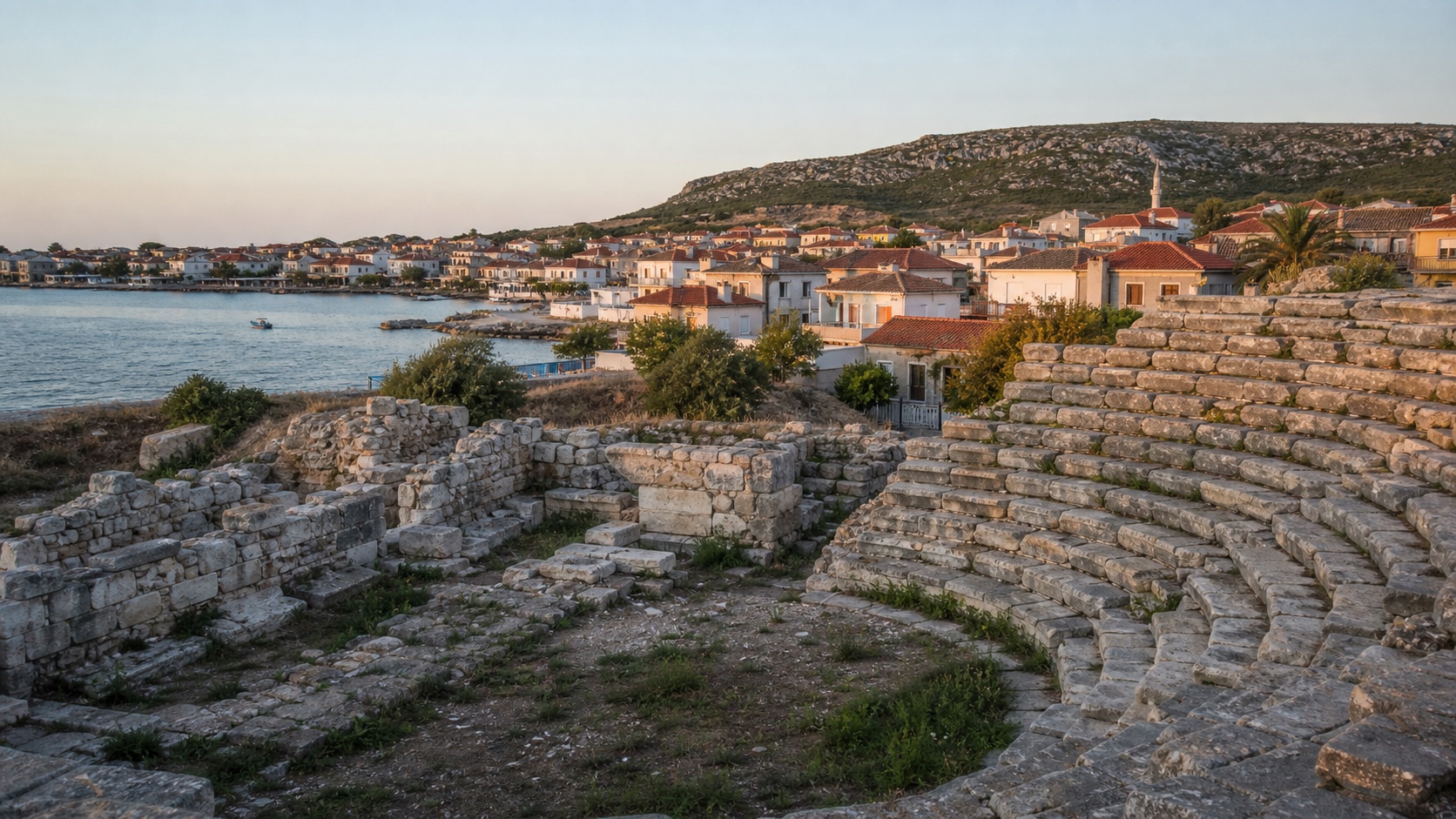
Ancient Phocaea lies beneath and around modern Old Foça. There is no single gate through which you enter the classical city; its story appears in excavation areas, fortifications, sacred places and the shape of the twin harbours. A visit therefore works best as an archaeological walk through a living town.
Phocaea was one of Ionia’s great maritime communities. Its sailors established settlements across the western Mediterranean, including Massalia—modern Marseille—and carried trade through networks reaching far beyond the Aegean. The sea is not background scenery here. It is the reason the city developed its distinctive reach.
A maritime city dispersed through Foça
Early city walls demonstrate both wealth and the need for defence. Excavations have identified remains associated with the sanctuary of Athena and a very early theatre, while later Byzantine, Genoese and Ottoman fortifications reused the strategic peninsula.
It is important to separate these phases. Foça Castle is not simply the intact fortress of Ionian Phocaea, and every old wall is not Greek. The richness of the town comes from successive communities rebuilding the same coastal positions.
Places that reveal ancient Phocaea
Athena sanctuary
The sanctuary occupied prominent ground and produced important architectural sculpture. Much of its meaning now comes through excavated fragments and museum collections rather than a standing temple.
Ancient theatre
The theatre remains are less monumental than later Roman examples but are significant for the study of early performance architecture in Anatolia. Access and visibility may vary with conservation work.
Harbours and fortifications
Walk between the waterfronts and Beşkapılar. Even where surviving masonry belongs to later periods, the geography explains why Phocaea’s harbours were defensible and commercially useful.
Planning your walk
Allow two or three hours to combine archaeological traces with the old town rather than expecting a compact ruins visit. Check whether individual excavation areas are open, respect barriers and remember that some evidence is visible only from public streets.
Summer traffic and parking can be difficult, while the waterfront becomes busy late in the day. A morning archaeological walk followed by lunch is usually calmer.
İzmirBlog can arrange a guided Old Foça day that connects Phocaean seafaring with the castle, historic streets and coastal landscape, including private transport from İzmir when you prefer not to manage seasonal traffic.
Editorial sources: Primary source · Supporting source 1. Visitor information can change; verify current access arrangements before travelling.
Share a useful local note