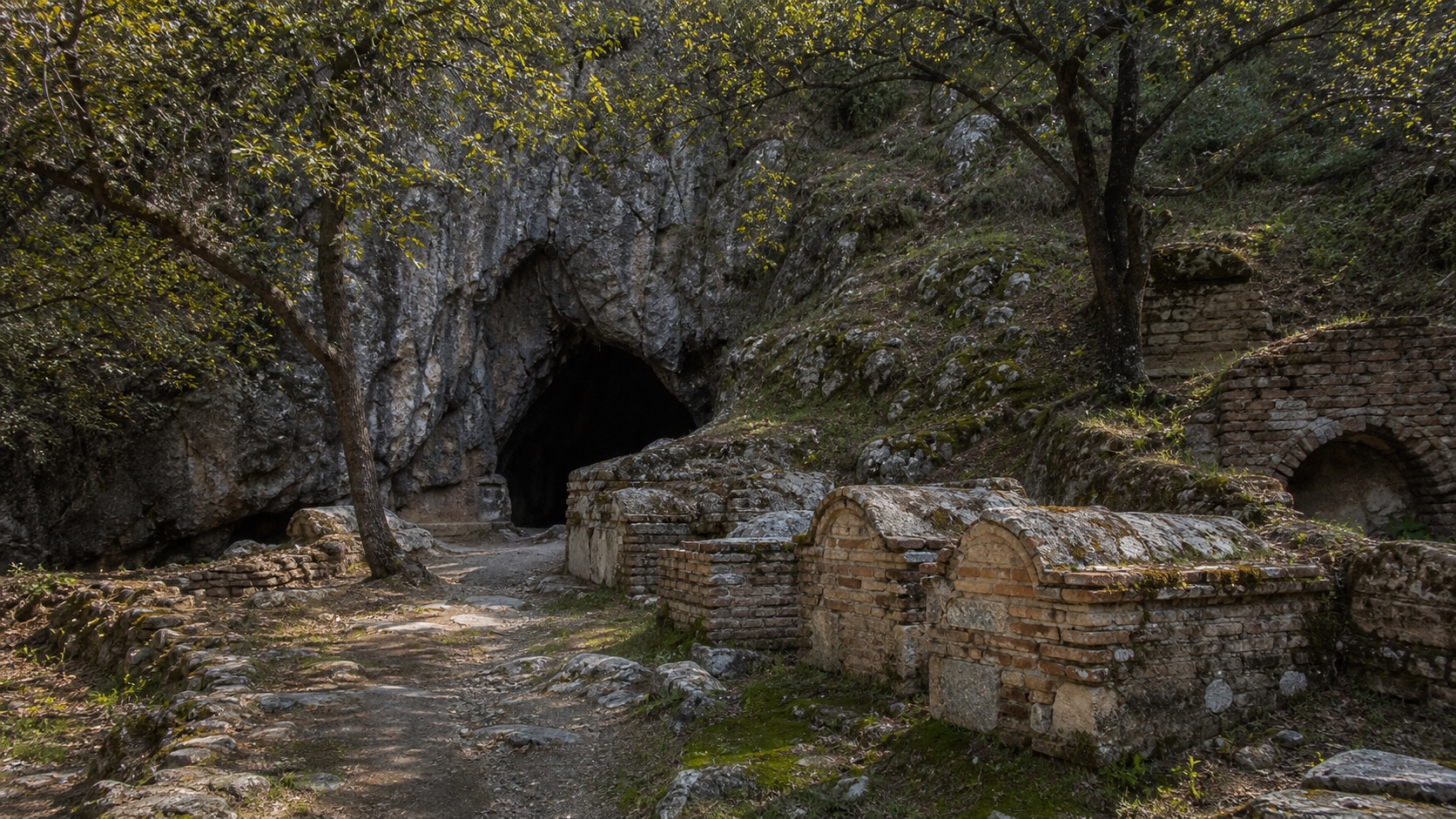
The Seven Sleepers story tells of young believers who refused an act of pagan worship, hid in a cave and awoke after an extraordinary span of time to find their faith accepted. Versions of the story became important in Christian and Islamic traditions, and several places across a wide geography claim association with it.
At Ephesus, the site on the slopes of Panayır Mountain developed into a Byzantine burial and pilgrimage complex. Excavations in the twentieth century identified a church, graves and inscriptions dedicated to the Sleepers. Those finds demonstrate the strength of local devotion; they do not settle every competing claim about where the legendary event occurred.
Legend and archaeology
The narrative is commonly placed during persecution under Emperor Decius and an awakening in the reign of Theodosius II. Its meaning centres on faith, resurrection and the passage of sacred time. Archaeology records what later communities built and believed around the Ephesus cave.
This distinction makes the site more interesting, not less. Visitors can appreciate both a shared sacred story and material evidence for centuries of pilgrimage.
What survives?
Cave and church remains
The cave sits within a complex of rock-cut and built spaces. Low walls indicate the church that served pilgrims and the burial community.
Graves and inscriptions
Fifth- and sixth-century burials helped establish the site’s Christian importance. Never enter closed tombs or touch inscribed surfaces.
Current access
The Seven Sleepers site has not always operated as a fully serviced attraction, and routes may close because of conservation, land management or safety. Verify current access before travelling and respect every barrier.
If entry is unavailable, the story can still be understood through Ephesus interpretation and museum material. Do not attempt an informal approach across protected land.
İzmirBlog can check current conditions and include the site in a Christian heritage itinerary when lawful access is possible; otherwise we will explain it from accessible locations rather than promise a visit that cannot be delivered.
Editorial sources: Primary source · Supporting source 1. Visitor information can change; verify current access arrangements before travelling.
Share a useful local note