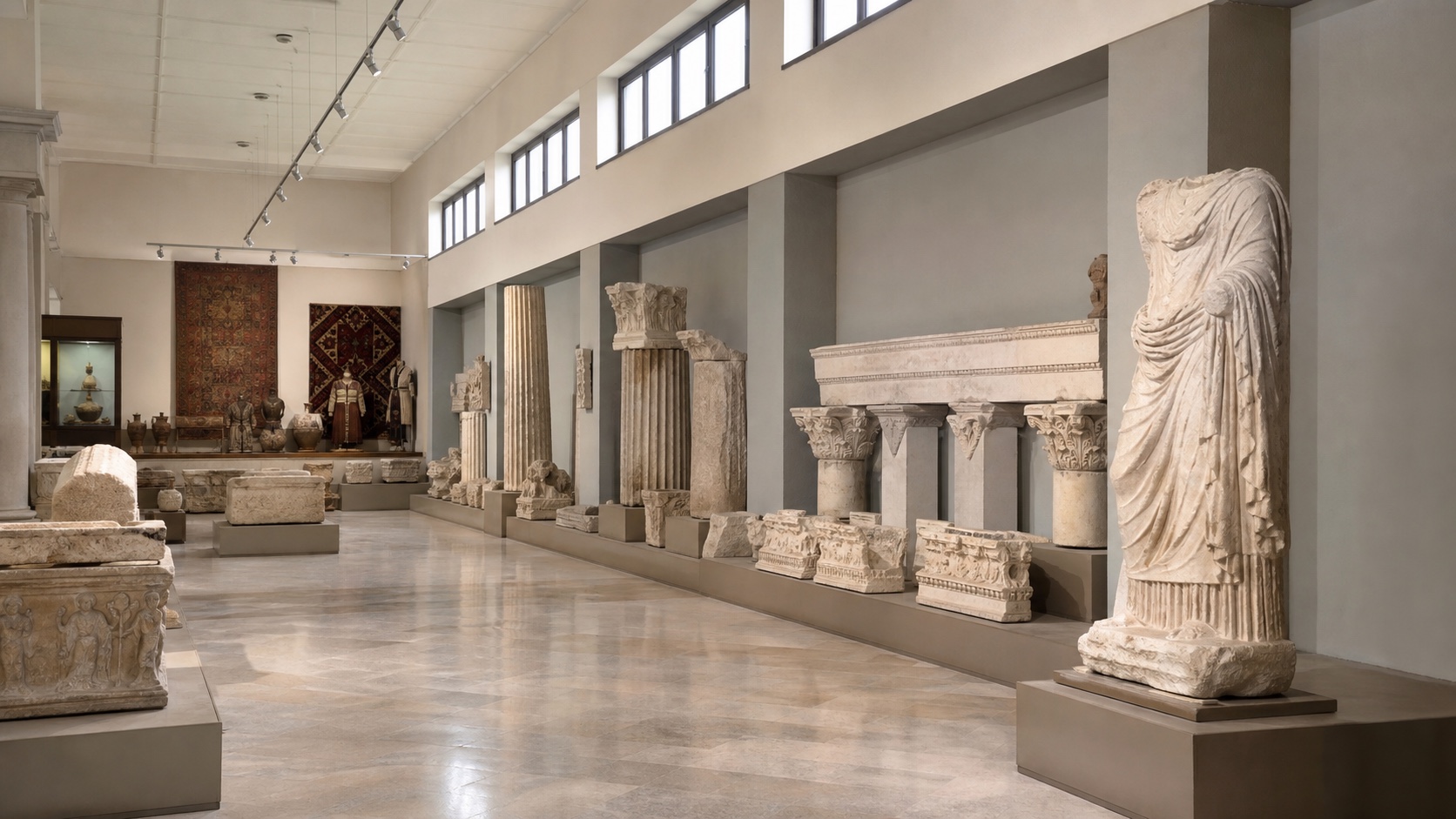
Bergama Museum is most rewarding when approached as more than an indoor stop between better-known landmarks. It offers a focused way to understand the material culture of Pergamon and the Bakırçay region, adding context that streets and archaeological sites cannot provide on their own.
The present museum was founded through Turkish–German cooperation in the 1930s and opened in 1936. Its architecture was conceived with reference to Pergamon’s Altar of Zeus, while its collections gather finds from the Acropolis, Asklepieion, Red Basilica and surrounding ancient settlements.
Why this museum matters
The strongest museum visits create connections between an object and the place that produced, used or preserved it. Here, the collection is especially useful for international travellers because it supplies the background that short labels at outdoor sites often cannot. Take time to notice dates, findspots, materials and changes in function rather than moving only towards the most photogenic object.
What to look for
1. Sculpture, architectural elements and small finds from Pergamon
This part of the collection rewards close attention. Look for evidence of making, use and later conservation: small details often explain more about the people behind the objects than scale or decoration alone.
2. Material from Pitane, Myrina, Gryneion and regional rescue excavations
This part of the collection rewards close attention. Look for evidence of making, use and later conservation: small details often explain more about the people behind the objects than scale or decoration alone.
3. An ethnography section recording Bergama’s traditional social life
This part of the collection rewards close attention. Look for evidence of making, use and later conservation: small details often explain more about the people behind the objects than scale or decoration alone.
Planning your visit
Visit the museum before or after the archaeological sites to reconnect displaced objects with their original landscape. A complete Bergama day needs realistic travel time.
Museum hours, admission rules and individual gallery access can change for maintenance, installations, public holidays or seasonal schedules. Use the official sources linked below shortly before departure instead of relying on an old timetable copied by a travel blog.
Make it part of a fuller İzmir day
A museum should clarify its neighbourhood, not remove you from it. Leave time afterward for the surrounding streets and for a meal or coffee nearby. If the museum lies outside central İzmir, avoid building a day around optimistic driving times: traffic and distances across the province are easy to underestimate.
İzmirBlog can arrange a private transfer or shape a museum-led itinerary around your interests, whether you want archaeology, family-friendly collections, maritime history, art or local food culture. The aim is a comfortable day with enough time to look, not a checklist of hurried entrances.
Editorial sources: Primary source · Supporting source 1. Opening hours, admission and access arrangements can change; verify the current details before travelling.
Share a useful local note