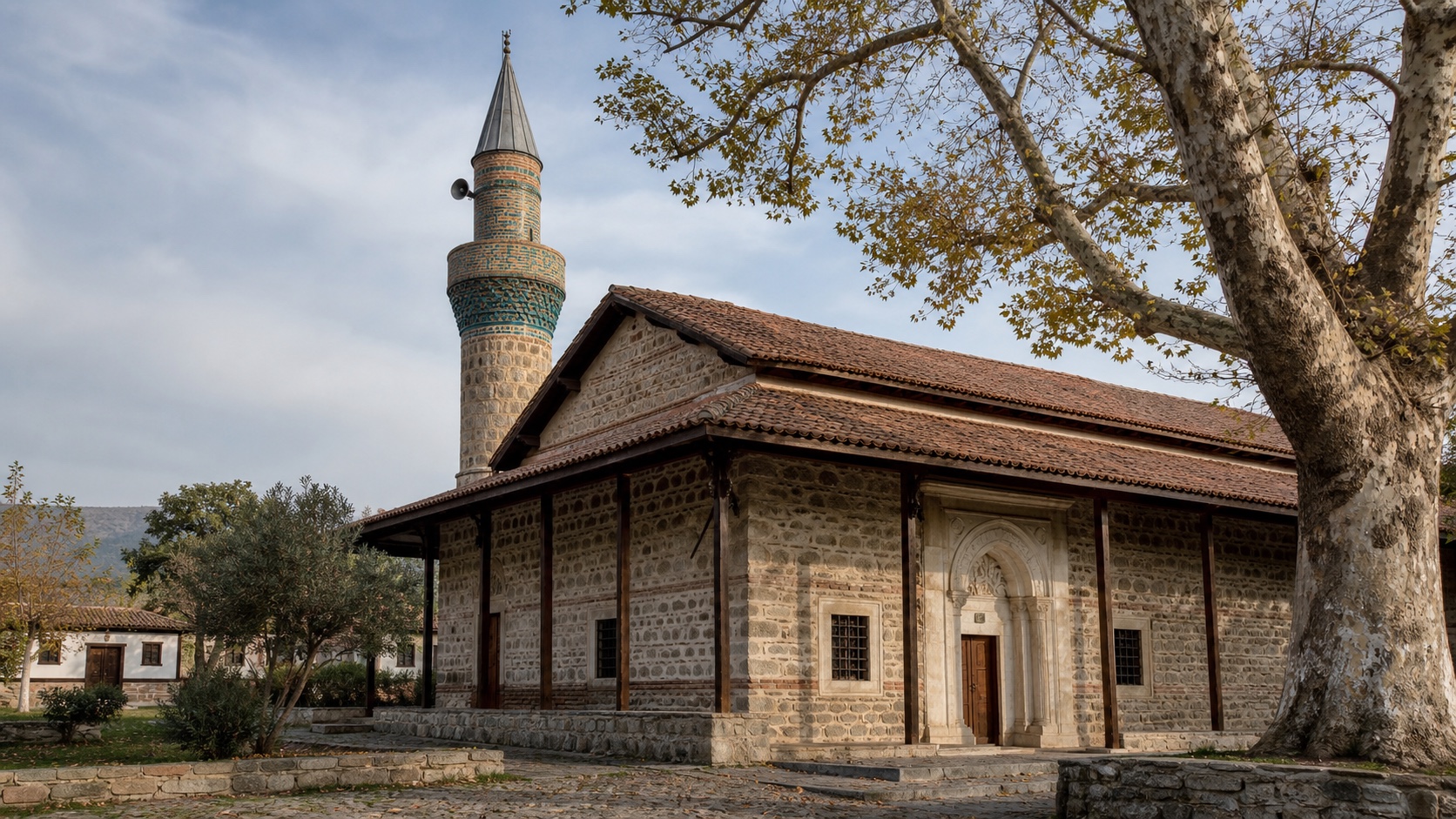
Birgi Grand Mosque, also known as Aydınoğlu Mehmet Bey Mosque, is the architectural heart of one of western Anatolia’s best-preserved historic towns. Mehmet Bey, founder of the Aydinid principality, commissioned the complex in 1312–13. The mosque and his nearby tomb survive, while the associated madrasa and bath have not endured in the same form.
Built on sloping ground beside the stream, the square prayer hall is divided into five aisles running towards the mihrab. Cut stone, rubble masonry and reused ancient blocks appear together in its walls. This mixture is not careless construction: it records the way medieval builders worked creatively with materials inherited from an older landscape.
Masterpieces in wood and tile
The mosque’s walnut minbar is its best-known treasure. Made by Muzaferiddin bin Abdülvahid in the interlocking kündekâri technique, it achieves complex geometry without treating the surface as a simple applied ornament. Carved entrance elements and historic window shutters add further layers of accomplished woodwork.
Dark purple and turquoise mosaic tiles frame the mihrab area. Outside, turquoise glazed bricks animate the cylindrical minaret in zigzag and diamond patterns. On the eastern façade, reused sculpture—including a weathered lion figure—creates one of the building’s most discussed details.
A respectful visit
The mosque remains active. Enter between prayers, remove shoes and dress modestly; women should carry a scarf. Never touch the minbar or historic woodwork, and avoid flash photography. Confirm current access locally because worship, conservation or community events can alter visiting conditions.
Allow thirty to forty-five minutes, then continue through Birgi’s lanes to the Mehmet Bey tomb and Çakırağa Mansion. The town deserves at least half a day rather than a rushed detour.
İzmirBlog can arrange a private Birgi and Ödemiş excursion, including transfer, guiding and a route balanced between architecture, village life and local food.
Editorial sources: Primary source · Supporting source 1. Visitor information can change; verify current access arrangements before travelling.
Share a useful local note