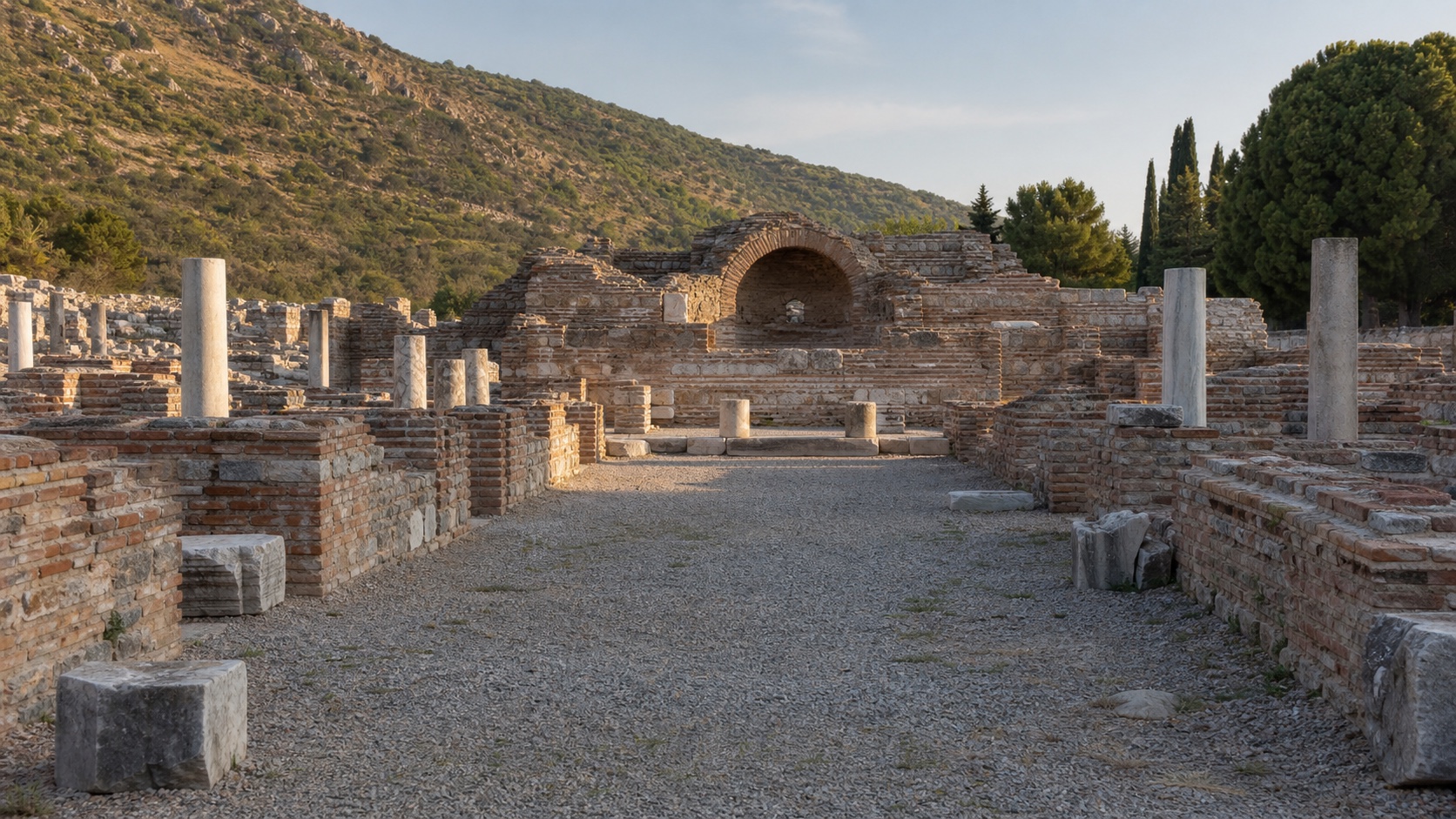
The Church of Mary lies near the former harbour of Ephesus, away from the busiest flow between Curetes Street and the Library of Celsus. Its quieter setting suits the building’s significance: this was one of the city’s principal early Christian churches and a monument closely associated with debates that shaped Christian doctrine.
The church was created within or beside an earlier Roman building, often connected with the Olympieion complex. Its architecture changed repeatedly, moving through basilical and later phases as Ephesus’s Christian community adapted the space.
The Council of Ephesus
The ecumenical council of 431 addressed the relationship between the divine and human natures of Christ and affirmed the title Theotokos—God-bearer—for Mary. The Church of Mary is traditionally linked with the council, although scholars continue to examine the exact locations used by participants.
For visitors, the responsible approach is to describe the association as strong historical tradition rather than claim that every surviving wall can be assigned directly to a council session.
What to notice
Long basilical plan
Follow the building’s axis and changes in floor level. Successive alterations can make the plan confusing, but they also reveal centuries of continued use.
Baptismal and liturgical spaces
Rooms associated with worship and initiation help reconstruct the church as a functioning institution, not simply a meeting hall for one famous event.
Harbour context
The nearby Harbour Street and silted port explain why this district once received travellers, merchants and church leaders from across the Roman world.
Visiting within Ephesus
Access can depend on the route operating through the archaeological site, and some areas may close for conservation. Check the current plan at the entrance. If open, allow twenty to thirty minutes in addition to your main Ephesus visit.
The site is exposed and interpretation may be limited. A guide can explain architectural phases without overwhelming the visit with theological terminology.
İzmirBlog can include the Church of Mary in a Christian heritage route linking Ephesus with St John’s Basilica and the House of the Virgin Mary, while keeping tradition, doctrine and archaeology clearly distinguished.
Editorial sources: Primary source · Supporting source 1. Visitor information can change; verify current access arrangements before travelling.
Share a useful local note