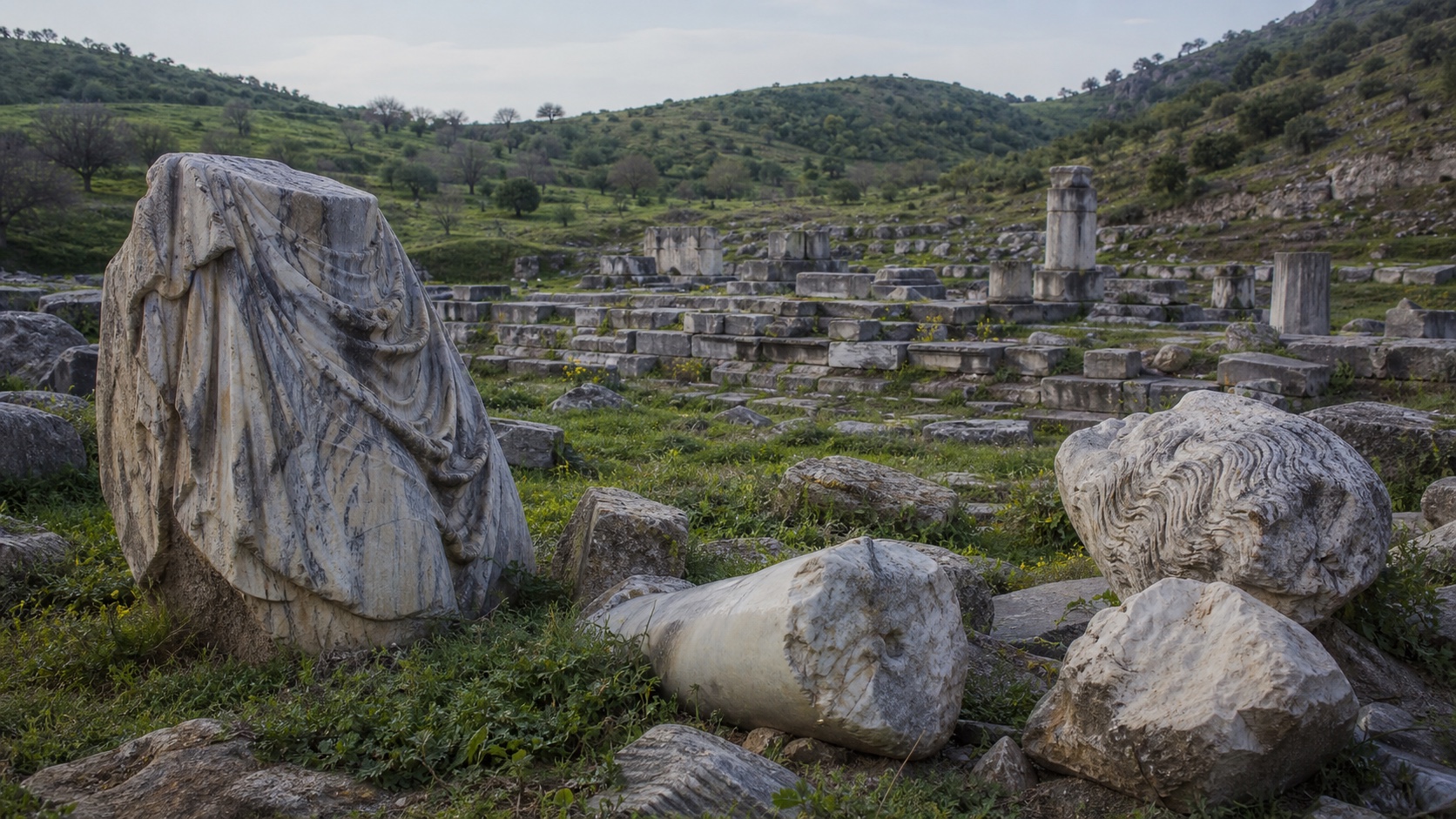
Claros was never a city. It was a sanctuary in a narrow, fertile valley between inland Kolophon and the coastal city of Notion. That distinction changes the way you read the ruins: people came here deliberately to consult Apollo, take part in ritual and join delegations whose names still survive in inscriptions.
The oracle gained particular fame during the Hellenistic and Roman periods. Its low-lying setting was connected with a sacred spring and grove, unlike sanctuaries designed to dominate a hilltop. Water, controlled movement and monumental sculpture shaped the experience of approaching the god.
How the oracle worked
Ancient consultation at Claros was an organised religious process, not a casual fortune-telling session. Cities and groups sent representatives, questions were presented through priestly officials, and responses were delivered within a tradition whose precise procedures changed over time. Inscriptions in the entrance area record delegations that travelled here, turning stone into a map of the oracle’s influence.
What to look for
Propylon and Sacred Way
The monumental entrance led onto a route lined with honorific monuments and statues. Follow the axis slowly: it was designed to separate arrival from the inner sanctuary and to make visiting groups visible within a shared ceremonial space.
Temple of Apollo
The large temple remained unfinished in parts, but its scale is unmistakable. Beneath it, spaces associated with the oracle and sacred water help explain why the building cannot be understood only from its exterior columns.
Monumental cult figures
Fragments of enormous statues representing Apollo, Artemis and Leto convey the ambition of the sanctuary. Conservation work may affect what is visible, so treat changing displays as part of an active archaeological project rather than a deficiency.
Planning your visit
Claros is relatively compact, but allow an hour to follow its ritual sequence. The valley can be hot and humid, and seasonal water conditions may affect parts of the site. Wear suitable shoes and check official opening and access information before travelling.
Notion lies close by, yet the two sites tell different stories: Claros was the sacred centre; Notion was a fortified port city. Combining them creates a much clearer picture than visiting either in isolation.
İzmirBlog can arrange a private route through Claros and Notion with transport from İzmir or the southern resorts, allowing time for the archaeology and the Ahmetbeyli coast without overloading the day.
Editorial sources: Primary source · Supporting source 1. Visitor information can change; verify current access arrangements before travelling.
Share a useful local note