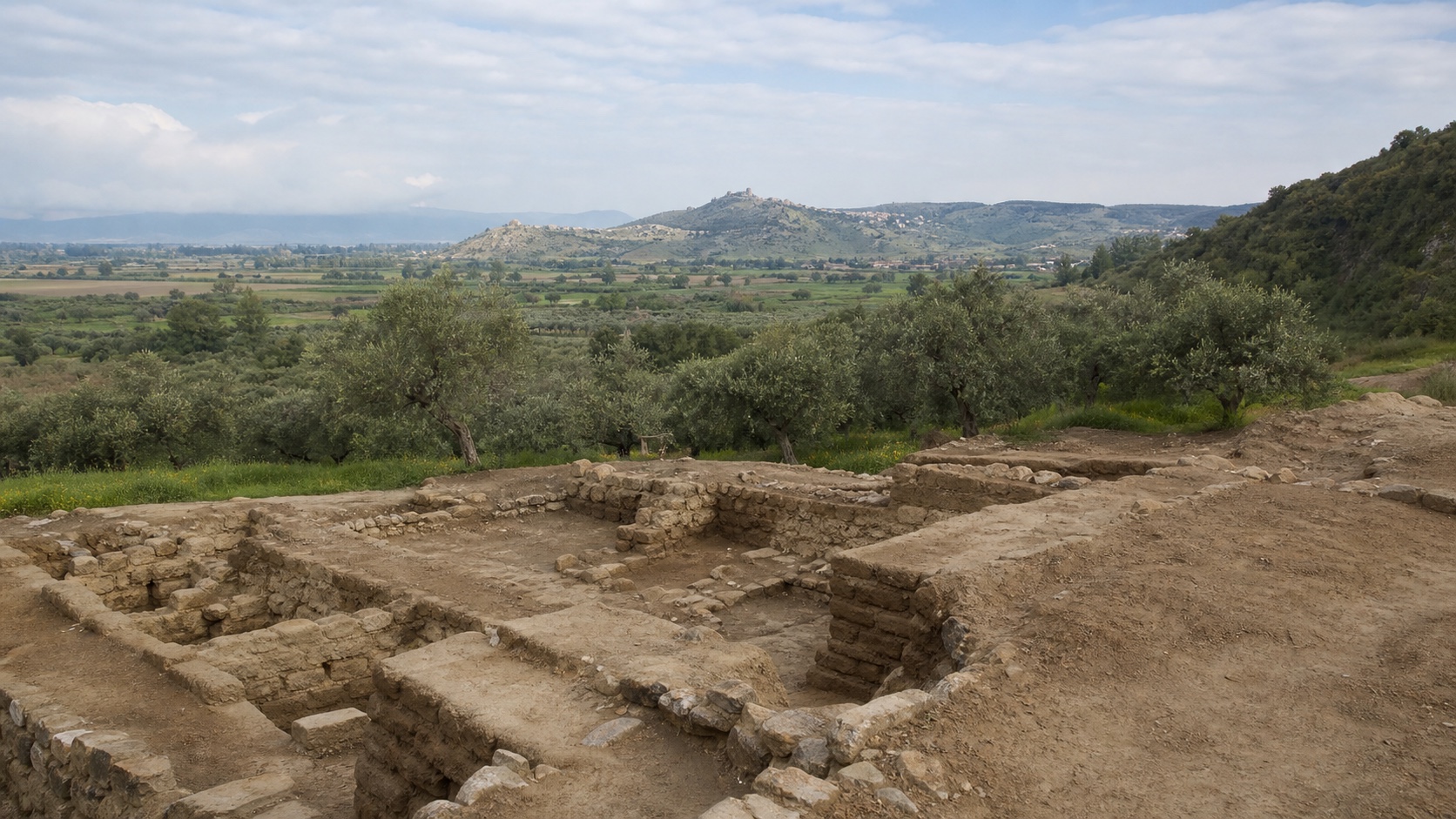
Çukuriçi Höyük tells the part of Ephesus’s story that marble monuments cannot. The mound lies near the later ancient city and preserves occupation beginning in the seventh millennium BCE, demonstrating that communities lived in this landscape thousands of years before the Roman port flourished.
Because Çukuriçi is one component of the Ephesus World Heritage property, its significance is international even though it is far less visible to ordinary visitors than the Library of Celsus. UNESCO uses the mound to establish the long continuity of settlement across the wider Ephesus landscape.
Life before the classical city
Excavations produced stone and bone tools, pottery, spindle whorls, obsidian and evidence for food production and craft. Such finds reveal households connected to exchange networks: obsidian, for example, reached communities through movement across considerable distances.
Later Early Bronze Age activity adds another phase. The mound should not be presented as the first version of the Roman city; it represents earlier communities whose relationship to later Ephesus is geographic and chronological, not a simple unbroken urban institution.
What is visible?
Çukuriçi is an archaeological mound and research area rather than a monumental ruin. Excavated features can be delicate, low and difficult to interpret. Public access may be restricted or possible only through controlled arrangements.
The most meaningful way to encounter the site is often through museum displays, World Heritage interpretation and views of its position relative to Ephesus. Never enter fenced land or excavation zones without permission.
Adding Çukuriçi to an Ephesus visit
Do not reduce time inside Ephesus merely to make a quick stop at an inaccessible mound. Instead, use Çukuriçi to broaden the narrative: begin with prehistory, move through the sanctuary of Artemis and classical city, then continue to Christian and medieval Ayasuluk.
Check current access with official authorities. If the mound is not open, the history remains worth including in a guided explanation.
İzmirBlog can design a layered Ephesus day that gives each component a clear role, avoiding duplicate stories and allowing the prehistoric landscape to enrich rather than compete with the main archaeological site.
Editorial sources: Primary source · Supporting source 1. Visitor information can change; verify current access arrangements before travelling.
Share a useful local note