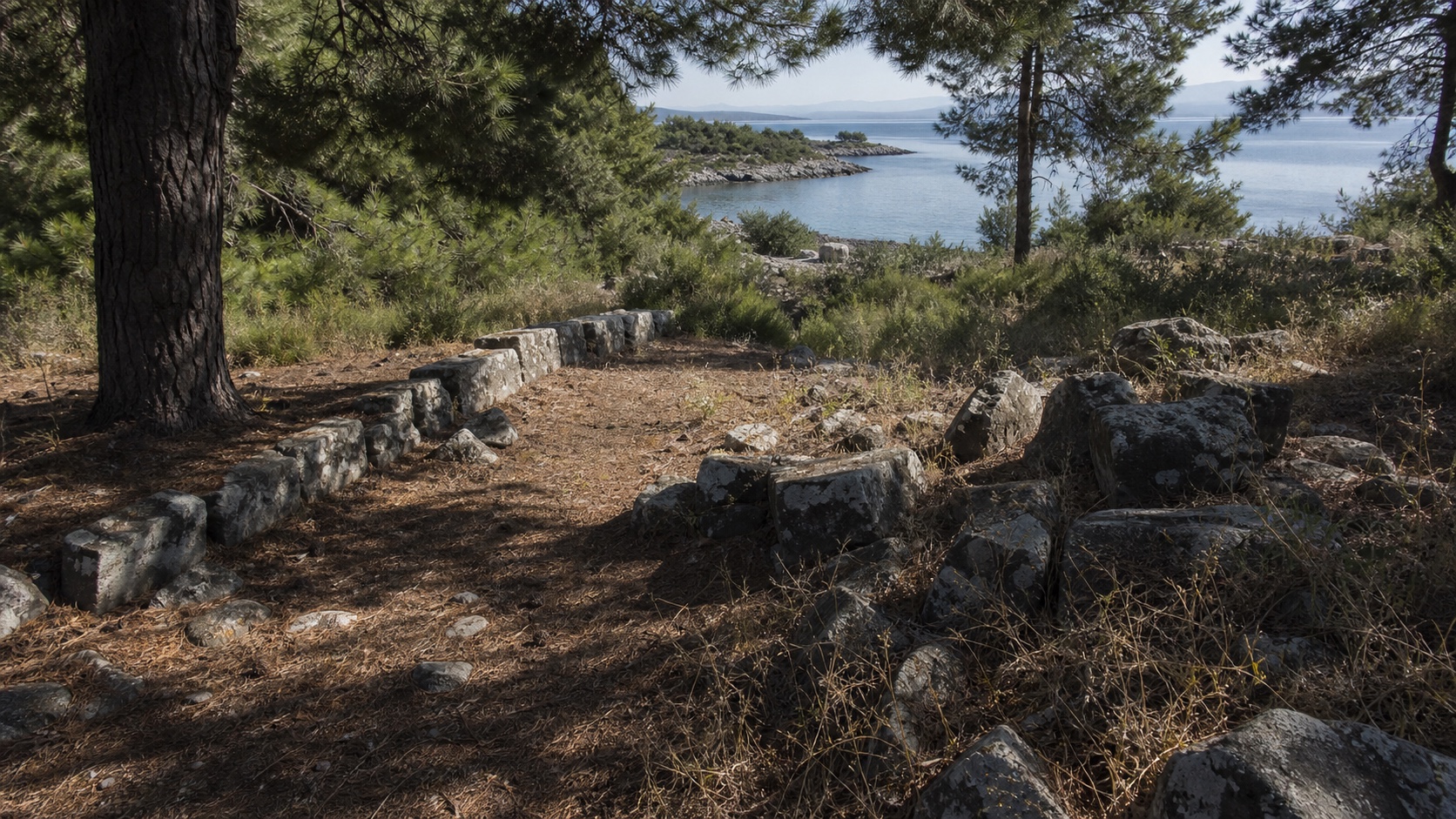
Gryneion occupied a small peninsula on Çandarlı Bay near Yenişakran. Ancient writers remembered it above all for a sanctuary of Apollo, while archaeological traces of harbour works show that sacred identity and maritime location belonged to the same compact settlement.
The city appeared among members of the Athenian maritime alliance in the fifth century BCE. In the fourth century, a Macedonian force under Parmenion captured and destroyed it during preparations for Alexander’s Asian campaign. Gryneion later became dependent on nearby Myrina, and its sanctuary remained the principal reason the name survived.
Apollo beside the bay
Ancient testimony praised the sanctuary, but visitors should not imagine a complete temple standing on the shore. The exact architectural picture is fragmentary. Its fame tells us that a relatively small community could hold regional religious importance disproportionate to its urban size.
The coastal grove traditionally associated with Apollo also suggests how landscape contributed to sacred experience. Sea, vegetation and approach were not separate from worship.
What can be seen?
Harbour traces
Long breakwater remains and blocks associated with a small tower have been identified. Coastline change and water conceal part of this infrastructure, so safe viewing is more important than attempting to reach every stone.
The peninsula
The form of the land is the clearest surviving feature. Stand where access is lawful and consider how a protected harbour, settlement and sanctuary could fit within a limited area.
Scattered evidence
Visible fragments may be sparse. Do not disturb stones or vegetation in search of a temple plan; the archaeological value of material depends on its context.
Planning responsibly
Gryneion is not a conventional visitor site with guaranteed hours, paths or facilities. Verify current access and land status in advance. Roadside stopping or crossing private land can be unsafe and inappropriate.
The site is most suitable for travellers already exploring northern İzmir’s Aeolian history. Pairing it with Myrina, Kyme or Çandarlı gives the limited remains a broader meaning.
İzmirBlog can check practical conditions and arrange a specialist route with private transport. Where access is uncertain, we will interpret the landscape from permitted areas rather than encouraging intrusion into a protected site.
Editorial sources: Primary source · Supporting source 1. Visitor information can change; verify current access arrangements before travelling.
Share a useful local note