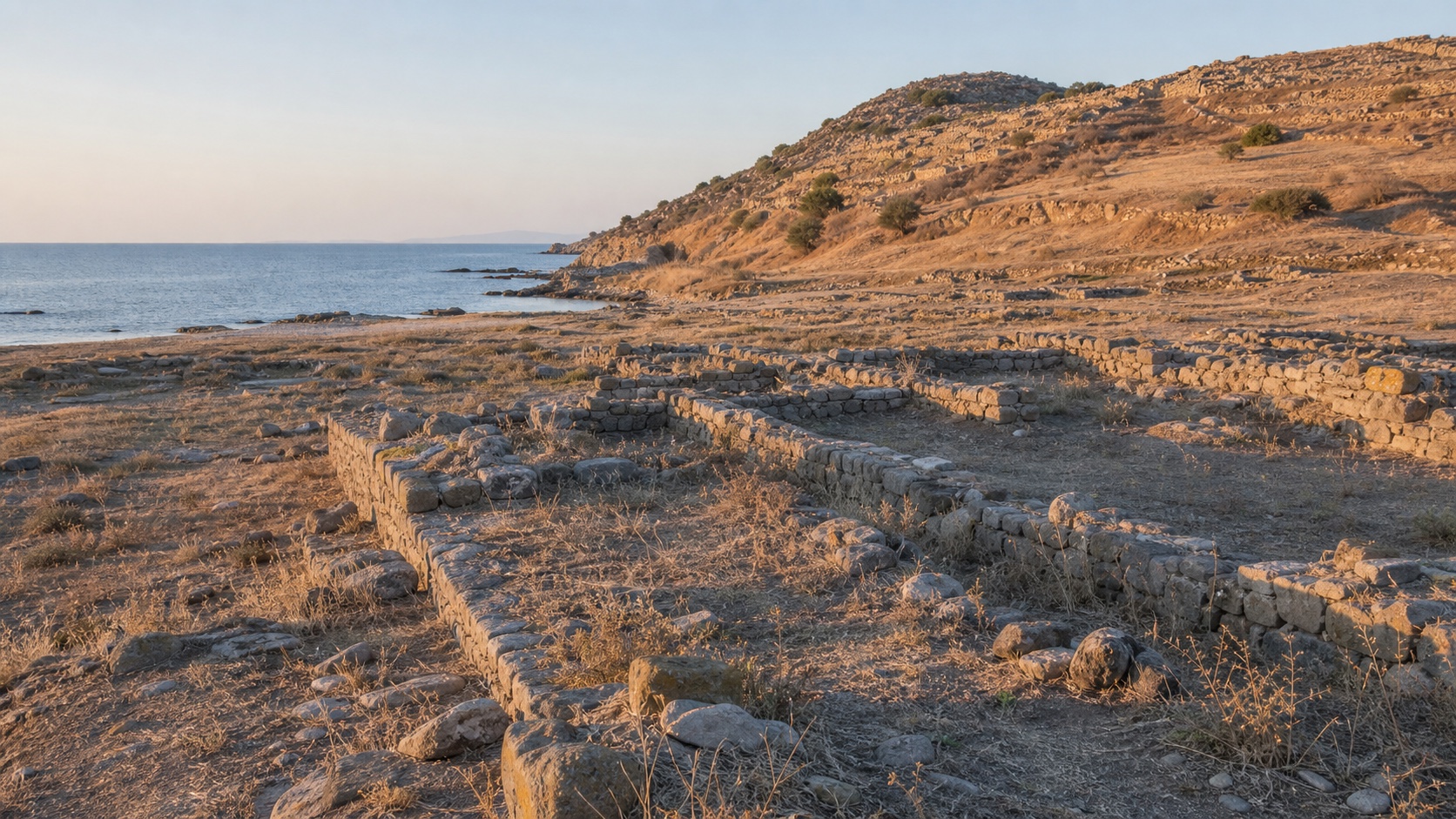
Myrina is famous for objects that travelled far from the place where they were made. Delicate terracotta figurines from its cemeteries entered museum collections across Europe and beyond, while the ancient city’s architecture was quarried, eroded or obscured until little remains standing above ground.
The settlement occupied hills near the mouth of the Güzelhisar River on Çandarlı Bay. It belonged to Aeolis, passed through Lydian, Persian, Macedonian and Pergamene spheres, and continued into the Roman era.
The city known through clay
Myrina’s Hellenistic workshops produced mould-made figurines with lively poses, elaborate dress and traces of colour. Figures of women, children, actors, Eros and mythological subjects were placed in graves and other contexts. Their refinement shows skilled serial production, but each object’s archaeological context matters more than its decorative appeal alone.
Nineteenth-century excavation and collecting dispersed many finds. Today, Myrina is often better represented in museum galleries than at the archaeological landscape itself—an important reminder that the history of archaeology also includes removal and international circulation.
What remains on site?
Harbour stones, pottery scatters and necropolis areas provide evidence of the city. The two-hill landscape helps establish its scale, but visitors should not expect a standing theatre or reconstructed civic centre.
Surface ceramics and architectural fragments are protected cultural material. Never pick them up, rearrange them or treat the ground as a source of souvenirs. Photograph finds where they lie and report anything vulnerable to the relevant authorities.
Visitor expectations and access
Myrina is not generally experienced through a formal, fully interpreted route. Access may cross sensitive, protected or privately controlled land, and conditions can change. Confirm permission and a safe approach before travelling.
For most visitors, combining a contextual landscape stop with museum displays is more meaningful than searching independently for scattered ruins. İzmir Archaeology Museum and other collections can help reconnect the figurines with the city that produced them.
İzmirBlog can research current access and include Myrina in a specialist Aeolian itinerary, while making clear which evidence is visible and which survives primarily through documented finds.
Editorial sources: Primary source · Supporting source 1. Visitor information can change; verify current access arrangements before travelling.
Share a useful local note