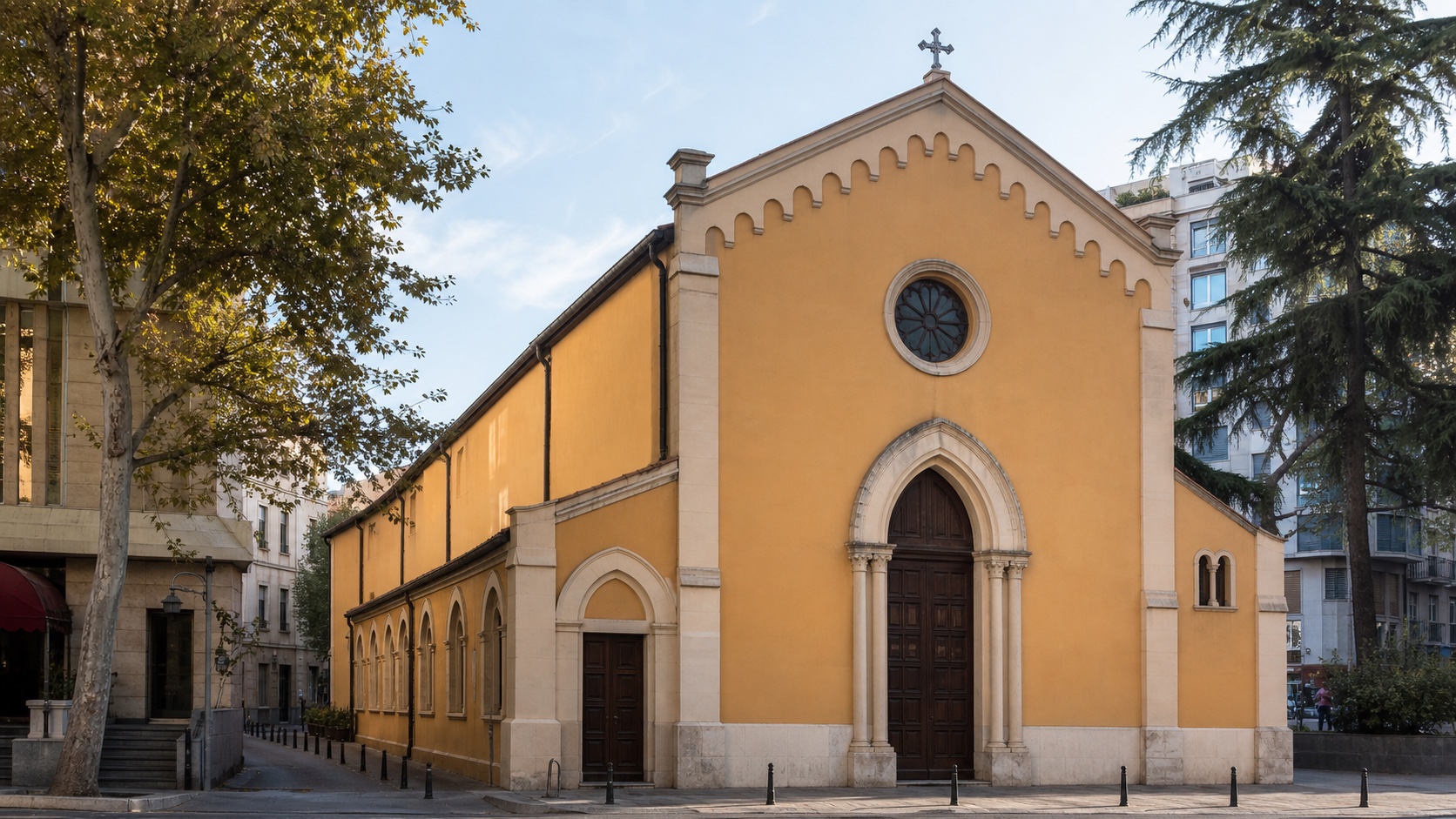
Saint Polycarp Church stands in the commercial centre of İzmir, easy to pass amid traffic and office buildings. Behind its walls is a richly decorated Catholic church dedicated to Polycarp, the second-century bishop and martyr remembered as one of the city’s earliest Christian leaders.
The present church dates to 1625 and was rebuilt and enlarged after fires and earthquakes. Major work in the eighteenth and nineteenth centuries created the three-nave interior seen today. Raymond Charles Péré—the architect associated with İzmir’s Clock Tower—painted scenes from Polycarp’s life during the late nineteenth-century restoration.
Who was Saint Polycarp?
Polycarp led the Christian community of Smyrna and belonged to the generation close to the apostles. Tradition connects him with St John. An early account of his martyrdom describes his refusal to renounce his faith and his execution in the second century.
The exact locations associated with his death and burial remain debated. Kadifekale traditions and later traveller accounts should be presented carefully rather than used to label uncertain ruins.
Inside the church
Fresco cycle
Péré’s paintings narrate episodes from Polycarp’s life and martyrdom. They are later artistic interpretations, not surviving images from early Christianity, and they form a valuable record of nineteenth-century Catholic İzmir.
Basilical interior
Columns divide the nave and side aisles, while chapels and a domed sanctuary organise worship. Details become easier to appreciate once your eyes adjust to the lower light.
Arranging a respectful visit
This is an active church, not a site with guaranteed museum hours. Access may require advance contact and can change around services, security needs or community events. Dress modestly, keep voices low and never photograph worshippers without permission.
Allow thirty to forty-five minutes when entry is available. The church fits naturally into a walk through central İzmir’s Catholic and Levantine heritage.
İzmirBlog can contact relevant venues and arrange a private multi-faith city route, but access to living places of worship is always subject to the community’s approval and schedule.
Editorial sources: Primary source · Supporting source 1. Visitor information can change; verify current access arrangements before travelling.
Share a useful local note