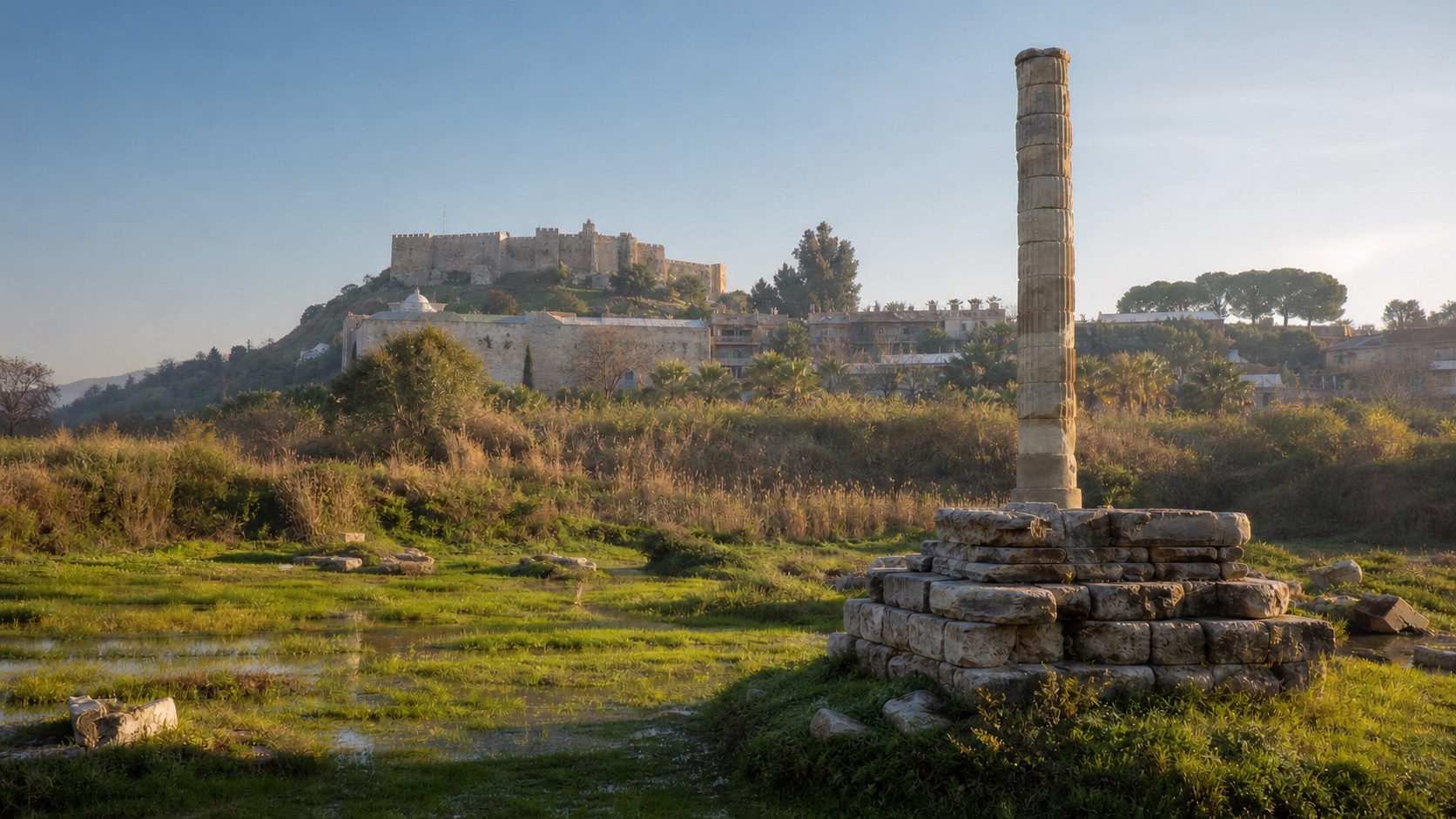
The Temple of Artemis was one of the most celebrated buildings of the ancient Mediterranean. Today, the Artemision near Selçuk is a quiet, low-lying site marked by foundations, scattered stone and a single reassembled column. The contrast between reputation and remains is not a failure; it is the essential experience of the place.
The sanctuary developed through several building phases. In the sixth century BCE, support from the Lydian king Croesus contributed to an immense marble temple surrounded by columns. Destruction by fire in 356 BCE was followed by rebuilding, and the cult continued to draw pilgrims, wealth and political attention.
Artemis of Ephesus
The Ephesian goddess had a distinctive local image and should not be reduced to the Greek huntress familiar from later European art. Museum statues show a richly adorned cult figure connected with the identity, protection and prosperity of Ephesus.
The sanctuary also held economic and civic importance. Offerings, visitors and privileges made it more than an isolated religious building.
What survives at the Artemision?
The column
The standing column is assembled from surviving drums and helps indicate scale, but it is not an untouched remnant rising in its original complete form. Use it as a visual guide, not as the sole measure of the temple.
Foundations and wetland setting
Changes in groundwater and sediment shaped both preservation and excavation. Walk the perimeter and observe how low the sanctuary sits relative to Ayasuluk Hill.
The wider view
From the area, later Christian and Islamic monuments can be seen across the landscape. This does not prove a simple replacement of one faith by another, but it offers a powerful view of sacred places accumulating around Selçuk.
How much time do you need?
Most visitors spend twenty to forty minutes. Entry arrangements may differ from the main Ephesus site, so check current information. The ground can be muddy after rain and shade is limited.
Pair the Artemision with Ephesus Museum, where sculptures and finds restore detail missing from the foundations. The main Ephesus ruins require a separate, much longer visit.
İzmirBlog can connect the temple with the museum, Basilica of St John and ancient city in a private itinerary that explains why Ephesus moved and changed rather than repeating the same headline at every stop.
Editorial sources: Primary source · Supporting source 1. Visitor information can change; verify current access arrangements before travelling.
Share a useful local note